Lyle Archtop Restoration Log: Part 1 - The Patient and the Plan

following the conclusion of the CE-3 chorus pedal repair project, I am shifting focus to my main instrument for jazz performances: The Lyle Archtop.
This series will document the repair and upgrade process of this vintage instrument.Previous Blog series: Vintage Maintenance: Restoring the Boss CE-3 Part 1
About Lyle Guitar
First, I should provide some context regarding the "Lyle" brand, as it no longer exists.
Lyle guitars were manufactured in the late 1960s and 1970s at the legendary Matsumoku Industrial plant in Matsumoto, Japan. Matsumoku was a premier manufacturer of that era, known for its high technical standards, and was also responsible for producing Epiphone and Aria Pro II models.
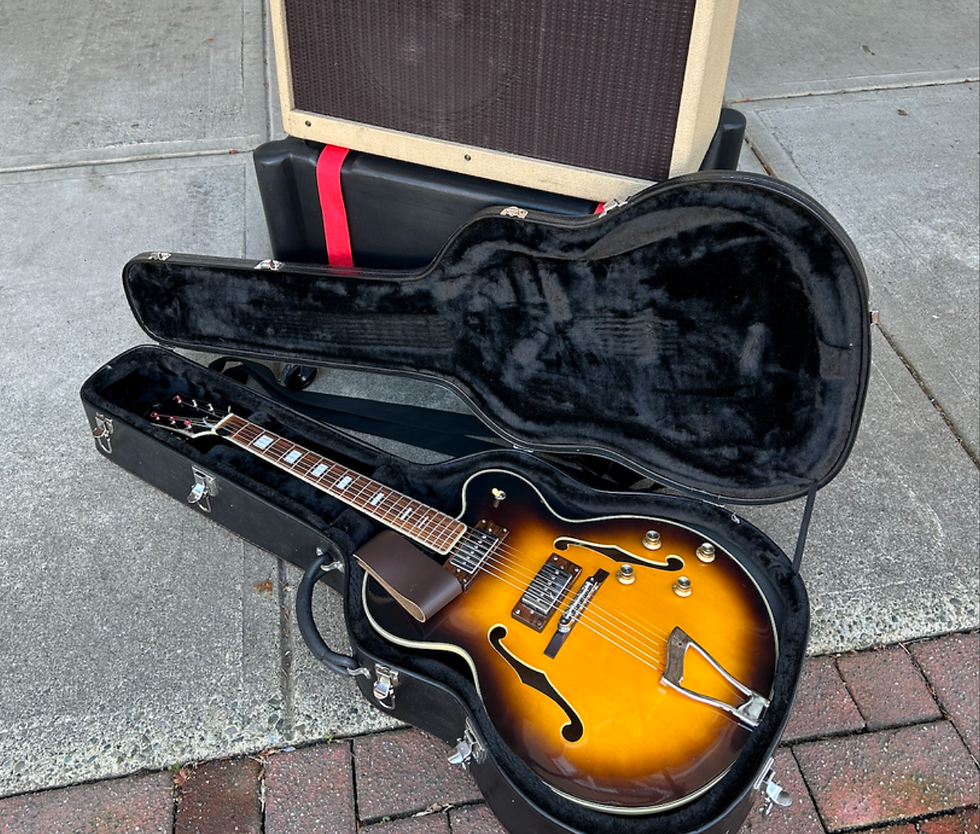
Japanese guitars from the 1970s surprised American manufacturers with their precision—a period often referred to as the "Lawsuit Era."
This Lyle is no exception. Being a fully hollow archtop, it features precise woodwork characteristic of the craftsmen of that time. Nearly half a century later, it remains structurally sound and possesses the dry, matured tone unique to vintage instruments.

I discovered this instrument in 2023.
I had just joined a jazz band and was searching for an authentic jazz tone.
At the time, I was unfamiliar with this hidden gem of a brand. In fact, I only picked it up to test an amplifier equipped with a 12-inch speaker and spring reverb.
However, before I even plugged it in, I was captivated by its acoustic resonance.
I left the store not with the amplifier, but with this guitar.
Since then, this guitar has served as my primary instrument for live jazz performances. However, two significant issues have persisted.
Problem 1: Non-Standard Control Layout
On standard Gibson-style instruments, the controls for the front (Neck) pickup are located closer to the strings/center of the body, while the rear (Bridge) controls are located further away near the rim.
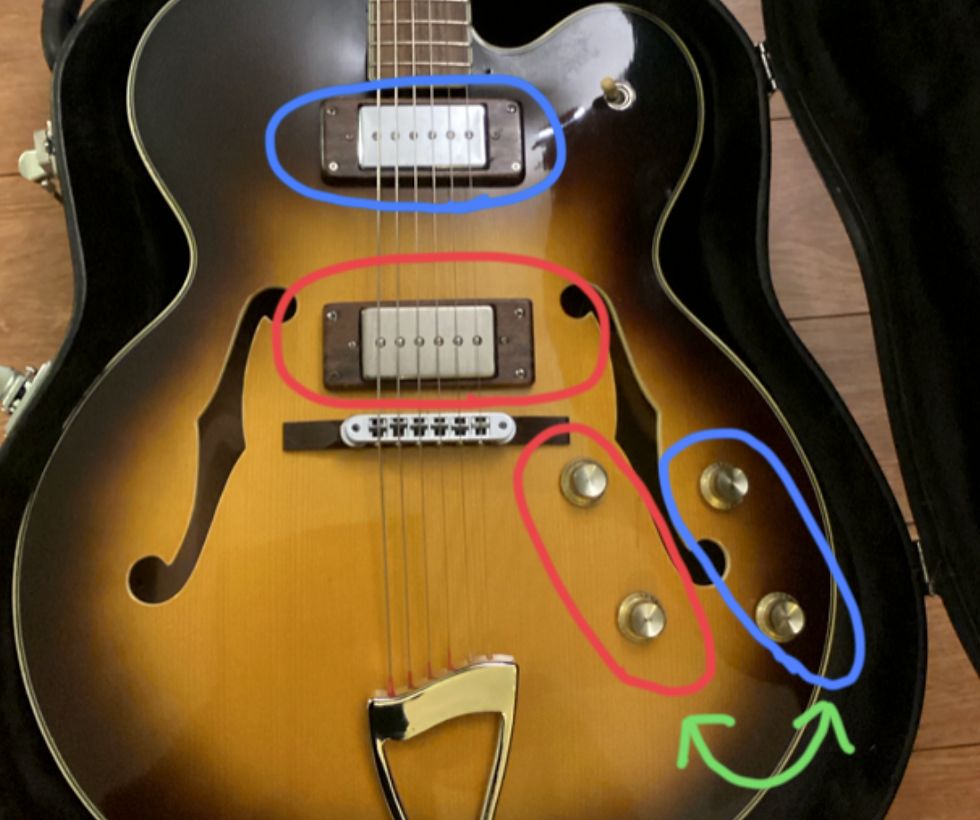
However, on this specific unit, a previous owner had reversed the layout. The Bridge controls are close to the hand, while the Neck controls are far away.
In jazz performance, where the Neck pickup is dominant, having the controls out of reach makes precise volume and tone adjustments difficult. Furthermore, the deviation from the standard layout leads to operation errors, creating a bottleneck during performance.
Problem 2: Excessive Noise
Until the mid-1970s, Gibson humbuckers were protected by patents, making it risky for competitors to copy the internal structure. Additionally, due to the popularity of "The Ventures" in Japan at the time, there was a high demand for Fender-style brightness over Gibson-style thickness.
Full article on Patreon @yewplaysmusic
Part 2 — The Ship in a Bottle